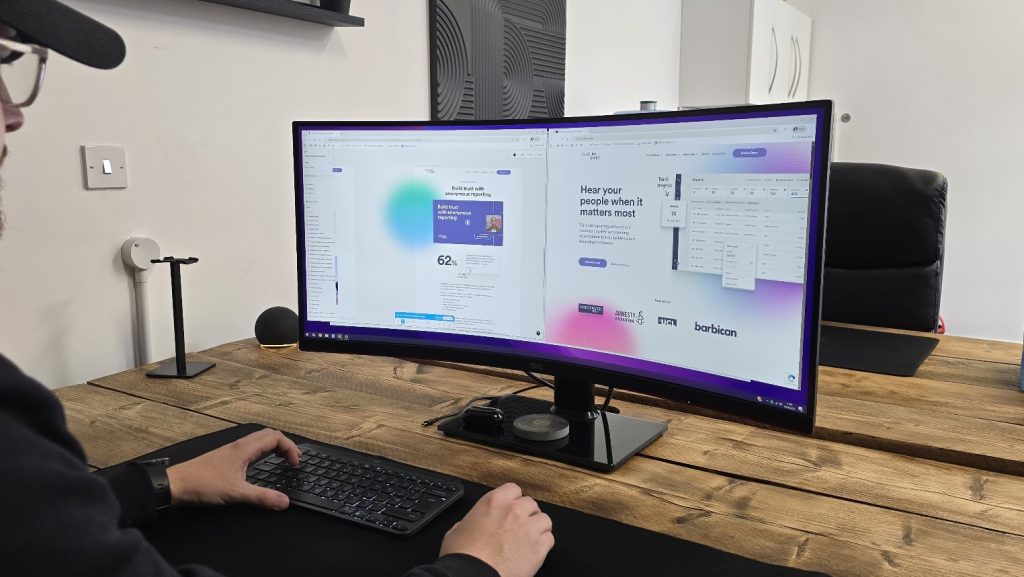


The way a website is designed has a direct effect on how well it performs in search. Design choices influence rankings, user experience and business results. A fast, accessible and well-structured site keeps people engaged and helps search engines understand what you do and how you do it.
Knowing what SEO is in website design is about more than adding a few keywords after launch. It means blending technical optimisation with layout, navigation, and performance from the very start.
Businesses that fail to plan this way often struggle with poor visibility or lose rankings during redesigns. Meanwhile, those that make these implementations across the board find better results.
Why Website Design Matters for SEO
When the term “website design” comes to mind, many think of the visuals alone. While these elements are important for building trust, establishing branding and showcasing your company, they are only one part of the puzzle. The site must function properly, lead users to where they want and need to go, and have a flow that makes sense. Without this, users can end up confused and distrust a site, with some studies showing that people form impressions within 50 milliseconds.
Strong web design supports both usability and visibility. Search engines reward sites that are easy to navigate, quick to load, and accessible across devices. One example of this is with mobile versions of websites. Google reports that 53% of mobile users leave if a page takes longer than three seconds to load. .
If navigation is unclear or content is buried, users leave, and high bounce rates signal to search engines that a page isn’t valuable. This means a downwards trend in ranking and conversions, which will then need amending to rebuild positions on the SERPs and trust to customers alike.
Why Website Design Directly Impacts SEO Rankings
At its core, SEO website design is the practice of weaving optimisation directly into development and layout of a website. That means building sites that are easy for search engines to crawl while also delivering a good experience for users.#
Design is also tied to trust. Research from Stanford found that 75% of users judge a company’s credibility based on its website, while another set of research from Interacting with Computers indicated that content and accessibility across websites would lead to users wanting to return to make a purchase.
A credible, well-designed site keeps users engaged, and higher engagement leads to better rankings. In this way, the overlap of design and SEO goes beyond visibility to influence reputation.
Businesses that overlook optimisation in design often find themselves retrofitting fixes later. By contrast, SEO-led design means faster load times, mobile responsiveness, and logical structures baked in from the start.

SEO Elements Every Website Should Have
Certain fundamentals should exist on every website if SEO is to succeed. Missing them weakens performance, no matter how strong the content or branding may be. These include:
- Optimised title tags and meta descriptions
- Structured headers (H1, H2, H3) with relevant terms
- Alt text for images to improve accessibility and rankings
- Fast load speeds through compressed images and clean code
- Mobile-responsive layouts
- Secure HTTPS via SSL certificates
- XML sitemap submitted to search engines
- Correctly configured robots.txt file
- Schema markup to enhance results in search
- Logical navigation and internal linking
- Short, SEO-friendly URLs
- Breadcrumb navigation for clarity
- Redirects managed during redesigns
- Analytics tracking to monitor performance
The Role of Structure and Navigation
A clear site structure is one of the strongest signals of quality for both users and search engines. Logical categories, well-labelled menus, and consistent internal linking make sure that content can be found and indexed, and that users can navigate to find what they need easily.
One of the common structures used for this is a flat site architecture. This method makes it so most pages on your website are just a few clicks away from the homepage. It’s “flat” because there aren’t many layers or deep levels of navigation.
From an SEO perspective, this is good because it helps search engines crawl your site more easily and ensures link authority flows efficiently to all pages. Plus, it helps keep sites organised as you expand your business over time.
By organising pages into logical categories and using consistent internal linking, you signal which pages are most valuable, helping them rank higher in search results. Additionally, good navigation reduces the chance of “orphaned” pages (pages that aren’t linked to anywhere else) which could otherwise be overlooked by search engines and users alike.

Content, Speed, and User Experience
Website performance is central to both rankings and engagement, and one of the most important factors in how SEO affects website design is loading speed. Google’s Core Web Vitals track how fast pages load and how stable they are during use. Poor scores harm both ranking potential and user satisfaction.
Another important element is content. As part of the user experience (UX), it needs to be presented in a way that is easy to access. Sites that bury valuable text under pop-ups or complex layouts frustrate visitors and lose credibility.
Meanwhile, UX-led design tends to increase conversions and returning customers because it focuses on user journeys. This means giving people helpful information when they need it, helping them see your business’ product as the solution to the problem they’re facing.
Mobile access is another key driver. Statista reports that mobile devices account for nearly 60% of all web traffic. This means making your website mobile friendly is no longer optional, it is essential.
A responsive design ensures that your content displays correctly on screens of all sizes, from smartphones to tablets, improving user experience and reducing bounce rates. Additionally, mobile optimisation affects search engine rankings, as Google prioritises mobile-first indexing.
Balancing Creativity with SEO Best Practice
SEO-focused design does not mean sacrificing creativity. Modern visuals, bold branding, and innovative layouts can still thrive when supported by strong technical foundations. The point is balance: creative design should not come at the cost of usability or search visibility.
Businesses sometimes worry that redesigns could harm rankings. In reality, with proper planning, updates often deliver improvements. Case studies, like our work with Culture Shift, show the results that SEO-led redesigns lead to: An increase in organic traffic and enquiries alike.
The safest route is to embed SEO optimisation into the design process from the outset. Businesses that recognise how design choices influence search results can build sites that stand out visually while performing strongly in rankings
When SEO principles guide design decisions, websites deliver measurable results. A thoughtful approach ensures that creative branding and search optimisation work hand in hand, leading to stronger rankings, higher enquiries, and long-term success.
Want to build your website from the ground up with SEO best practices? RedCore Digital designs websites that not only look great but are fully optimised for SEO. Get in touch today to start your SEO-friendly redesign.