

A growing blog is usually seen as a positive thing. But when a website accumulates years of content without structure or purpose, the result is often the opposite. The signal-to-noise ratio becomes too high, irrelevant pages dilute authority, and internal linking becomes messy.
This is where content pruning has genuine commercial value. It simplifies your site, sharpens relevance, and improves how search engines understand the relationship between your blog and the rest of your content.
For a client in the manufacturing industry, we recently completed a large-scale pruning project where more than 120 blog posts were removed, refreshed, or reworked.
The results were clear: a leaner blog with better relevance and stronger commercial performance.
Here’s the exact process teams can use to prune content safely.
Start by Reviewing the Data, Not Assumptions
Pruning works best when decisions are based on measurable impact rather than gut feeling. Before removing anything, review performance across the last 12 to 18 months (because this lines up with GSC data). Look at sessions, backlinks, and click data, but also consider what role each post plays in your broader strategy.
For clients with strong baseline performance, this process sits naturally alongside the audits and benchmarking within our core SEO agency services.
When Should a Business Consider Content Pruning?
Pruning is particularly valuable when:
- Your blog has grown without clear direction
- You have hundreds of legacy posts with limited performance
- Your internal linking structure has become diluted
- Your content no longer reflects your current services or positioning
- You want to improve relevance and crawl efficiency
For many businesses, this becomes one of the highest-impact improvements they can make in a short window of time. In most cases, a structured pruning project can be completed in one or two days, depending on the size of the site.
Identify Low-Value Content Using Clear Criteria
Most websites have legacy posts that once served a purpose but now contribute little. We use a simple but effective three-point framework:
- Posts with fewer than 100 sessions in the last 18 months
- Posts with no backlinks
- Posts that are no longer relevant to the business
When a post meets all three criteria, it is usually safe to remove. Pages that fail only one or two of these checks may still have potential, whether through rewriting, reformatting, or expanding the topic.
Using consistent criteria ensures decisions remain objective and reduces the temptation to keep content simply because it “feels” important.
Refresh, Rewrite, or Remove
Once you have a full list of posts, prioritise them into three groups:
- Posts to delete
- Posts to rewrite
- Posts to keep
Deleting weak content strengthens your overall content portfolio by reducing irrelevant pages and making your blog more focused.
Refreshing the posts with genuine potential creates new opportunities for rankings and visibility. This often includes updating information, improving formatting, strengthening keyword targeting, and aligning with your current tone of voice.
Teams that want support elevating on-page depth often pair this step with our copywriting services.
Strengthen Internal Linking for Better Commercial Impact
One of the biggest advantages of content pruning is that it creates space for stronger internal linking.
With fewer irrelevant articles, it becomes easier to guide users and search engines towards the pages that matter most.
During the project referenced earlier, more than 100 new internal links were added to commercial pages. This helped strengthen topical connections and improve visibility for key service and product pages.
Internal linking remains one of the most overlooked ranking levers, and it often ties directly into wider site improvements made through our technical SEO work.
The Impact of a Leaner, Higher-Quality Blog
After removing more than 120 posts, refreshing 24 others, and adding new internal links, the outcome was clear:
- A reduction of only 0.35% in blog traffic despite deleting nearly a third of all articles
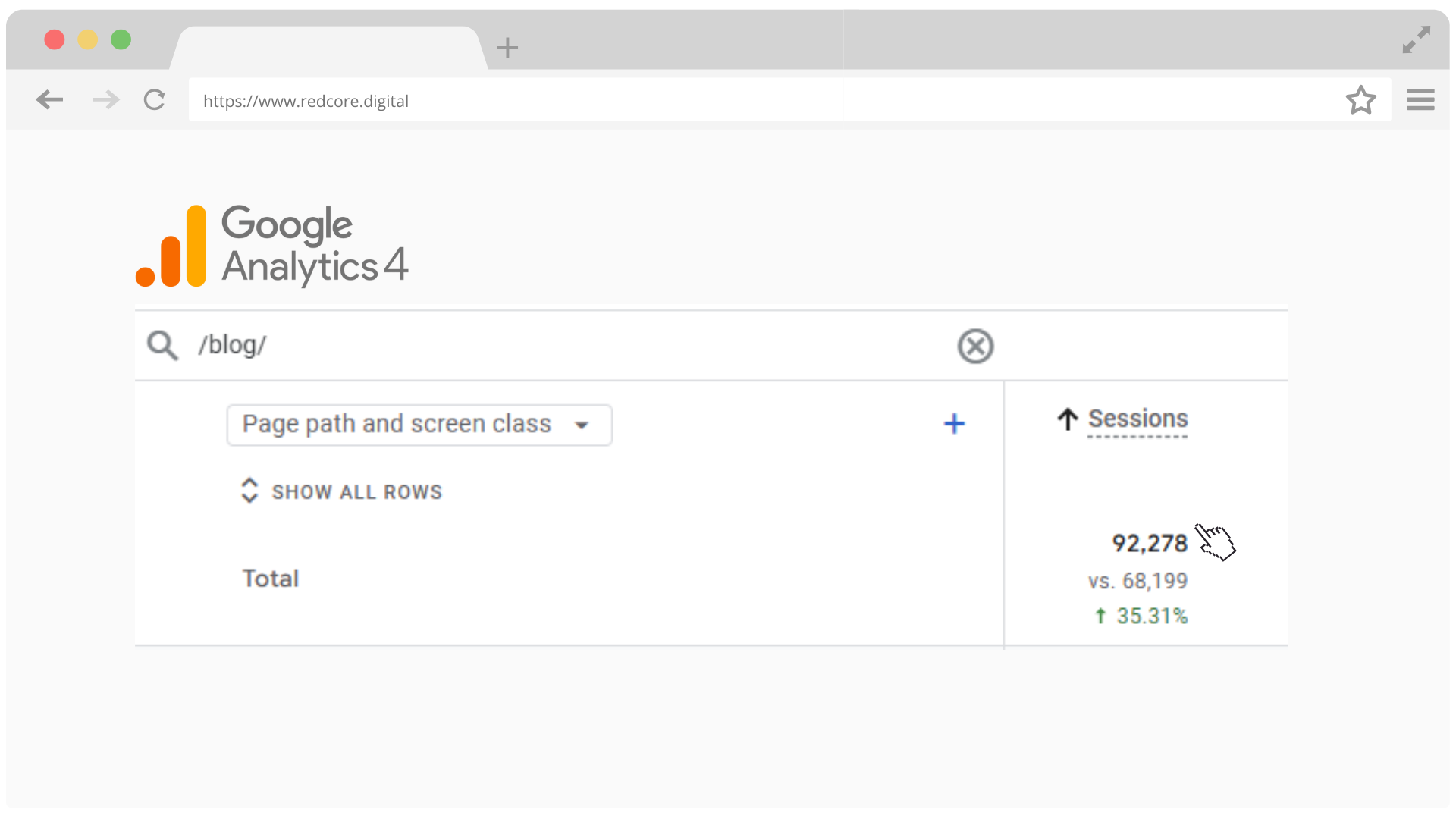
- A 35% increase in organic traffic to the blog
- A 15% increase in organic traffic to commercial pages
This uplift cannot be attributed solely to the deletions, but the improvement in content quality, relevance, and internal linking clearly contributed to stronger performance.
Pruning is not about deleting content blindly. It is about improving the overall quality of your site and ensuring your blog actively supports your commercial goals rather than distracting from them.
A Leaner Blog Sends Clearer Signals
A cluttered blog makes it harder for users to find what they need and harder for Google to determine what deserves to rank.
Removing noise strengthens your content architecture, improves authority signals, and gives your most valuable pages a better chance of performing.
If you want support reviewing your content, improving relevance, or building a stronger content strategy, speak to the RedCore team about refining your SEO and content approach.