
SEO vs PPC: Key Differences at a glance
| Factor | SEO | PPC |
|---|---|---|
| Cost Structure |
|
|
| Speed of Results |
|
|
| Longevity |
|
|
| Control and Targeting |
|
|
| ROI and Performance Measurement |
|
|
| Target Audience Intent |
|
|
| Effort and Maintenance |
|
|
What is SEO?
Search Engine Optimisation is the process of improving your website so it ranks higher in organic (non-paid) search engine results. By optimising your content, website structure, and authority, SEO helps search engines understand your website while making it more valuable to users.
Unlike paid advertising, SEO focuses on earning visibility naturally over time, making it a sustainable long-term marketing strategy.
On-page SEO
On-page SEO refers to everything you can do on your website to help you improve your ranking on search engines. This includes title tags, meta descriptions and header tags. It ensures search engines understand your content and match your page to user queries
Off-page SEO
Off-page SEO refers to the steps you can take to improve your ranking without altering your website’s content to raise its authority, trust and search rankings. This may include orchestrating a strong backlink campaign to increase your domain authority.
Technical SEO
Unlike off-page and on-page SEO, which focus on content and external factors, technical SEO deals with the website’s backend structure so search engines can easily find, crawl, render and index its pages. The goal of technical SEO is to optimise a website’s functional standing so that search engines will rank its pages higher.
SEO Pros
- Builds organic traffic
- Less expensive long-term
- Improves trust and credibility
- More sustainable for long-term growth
SEO helps your website appear higher on search engine results pages (SERPs). Higher visibility can lead to increased organic traffic from users actively searching for your products or services, helping to build trust, generate leads and differentiate your business from competitors. Recognising the importance of a strong SEO strategy can help businesses build a strong foundation for sustainable, long-term growth.
- Results aren’t immediate
- Competitive keywords
- Consistent search engine algorithms updates
- Tedious and time-consuming
SEO typically begins delivering noticeable results within 3–6 months, although highly competitive industries may take 6–12 months or longer. It also involves high competition and doesn’t guarantee a return on investment.
What is PPC?
Pay-Per-Click is an online advertising model where businesses pay each time someone clicks on their advert. These ads commonly appear at the top of search engine results pages, on social media platforms, and across display advertising networks.
Unlike SEO, PPC delivers immediate visibility, allowing businesses to quickly reach potential customers searching for relevant keywords. Understanding the importance of a PPC strategy can help businesses make the most of this immediate visibility and ensure their campaigns are aligned with their wider marketing goals.
PPC Key components
The key components of PPC marketing include keywords, ad extensions, bidding strategies, landing pages, ad copy, quality scores.
- Keywords are the words and phrases that match user search intent and trigger your ads to appear.
- Ad extensions are extra pieces of information, such as phone numbers, site links or locations that expand your ad.
- Bidding strategies are the financial approach you choose (maximum cost-per-click) to manage your budget and ad placement.
- Landing pages. These are the web pages the user will arrive at after clicking on your ad.
- Ad copy consists of text, headlines and calls to actions that persuade users to click on your ad.
- The quality score is a rating assigned by platforms like Google Ads, based on your ad relevance, expected click-through-rate and landing page quality.
PPC Pros
- Quick results
- Reach the right audience
- Content will appear at the top of search engine results
PPC offers fast results, precise audience targeting, total budget control and clear data tracking. You only pay when a user clicks on your ad, making it a flexible tool for driving immediate traffic and sales.
PPC Cons
- Expensive
- Results depend on campaign performance, meaning poorly managed campaigns can result in a low ROI
- Visibility is temporary
The main cons of PPC include escalating costs in competitive marketing, financial loss when clicks fail to convert into sales, a lack of long-term equity since traffic stops the moment you stop paying, and the ongoing time and technical expertise required to manage campaigns effectively.
Key differences between SEO and PPC
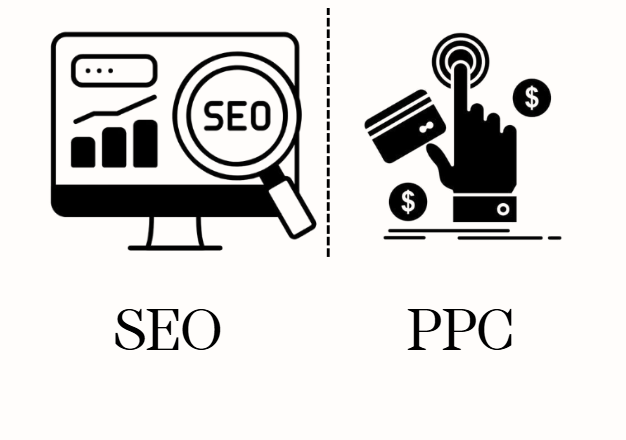
SEO and PPC both help drive traffic to your website, but they work in different ways. SEO generates free, organic traffic over time by improving your search engine rankings, whereas PPC delivers immediate traffic through paid advertisements. While organic clicks cost nothing, every click on a PPC ad incurs a charge through advertising platforms such as Google Ads.
Which strategy is right for your business?
The right approach depends on your objectives, budget, competition and timeline.
SEO might not be the right choice for you if your website needs fast results, targets a smaller audience, relies on temporary landing pages or operates in a market dominated by massive brands that you cannot outrank. But If your goal is sustainable growth and building a strong online presence, SEO is often the better long-term investment.
Choose SEO if:
- You want long-term growth.
- You have time to build authority.
- You want to reduce advertising costs.
- Your budget is limited.
- You publish useful content regularly.
If you need immediate inquiries, sales or visibility, PPC can produce results much faster. However, PPC may not work for your company with its high costs and financial risks.
Choose PPC if:
- You need leads immediately.
- You’re launching a new product.
- You have seasonal promotions.
- You want to test keywords quickly.
- You operate in a highly competitive market.
Many businesses don’t choose one over the other, they use both strategically.
How SEO and PPC work together
Rather than viewing SEO and PPC as competing strategies, think of them as partners. An ecommerce retailer launching a new product may use PPC to generate instant sales while creating SEO content to attract organic traffic over time.
PPC can generate leads while your SEO rankings are still developing. As your organic visibility improves, SEO can reduce long-term advertising costs. In addition, PPC keyword data can help identify high-performing search terms to inform your SEO strategy, while retargeting campaigns can re-engage visitors who first discovered your business through organic search.
Using both strategies together often creates a stronger overall digital presence than relying on either one alone. A combined strategy allows you to:
- Capture both organic and paid search traffic.
- Increase brand visibility across search results.
- Generate short-term revenue while building long-term growth.
- Gather valuable customer insights more quickly.
- Maximise your return on digital marketing investment.
For businesses operating in competitive industries, combining SEO and PPC often provides the most comprehensive approach to online marketing.
Final Thoughts
SEO and PPC are both highly effective strategies, but they serve different purposes. SEO focuses on building long-term organic visibility and sustainable growth, while PPC provides immediate traffic, leads and measurable results.
The best strategy depends on your business goals, budget and how quickly you need results. For many businesses, the strongest approach is not choosing one over the other but integrating both into a cohesive strategy.
By combining the immediate impact of PPC with the long-term benefits of SEO, businesses can create a balanced digital marketing strategy that drives consistent traffic, generates qualified leads and supports sustainable business success.